Photovoltaic panel for an integrated solar roof
FIT VOLT
Dimensions: 558 × 2040 mm
Power: 175 W
FIT VOLT roofing panel; the complete system is quoted for the individual project.
Sales terms: individual quotation according to configuration and order scope.
Photovoltaic roofing element FIT VOLT, 175 W / 558 × 2040 mm
231,98 € incl. VAT
In stock
In stock
Description

SOLROOF photovoltaic roof integration
The roof surface can protect a building while also serving as a source of electricity. SOLROOF combines photovoltaics with metal roofing, making the active elements part of the roof slope. The solution is particularly relevant when building a home or replacing a roof, when both decisions can be made together. It gives owners a way to use solar energy while maintaining a unified appearance for the building.
1 Roof and photovoltaics in a shared design
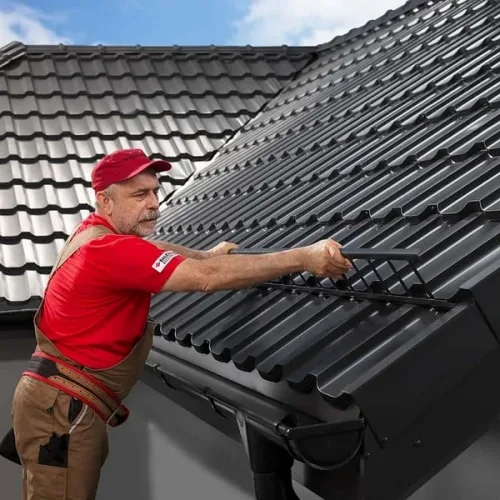
Active FIT VOLT panels combine photovoltaic cells with a steel base. Inactive FIT panels complement them, allowing the generating areas and the rest of the roof to form a coordinated arrangement. Unlike modules mounted above a completed covering, the installation is not a separate layer projecting above the roof slope. This benefits owners who value clean roof lines and want to avoid a visual split between covering and equipment fitted later. The design can account for sunlight and building geometry. Active sections are positioned where technically appropriate, while the remaining areas retain a consistent appearance without every space being filled with cells.
2 Generating electricity on a surface already needed
A roof occupies space that the building needs anyway. Integrating photovoltaics adds a function without allocating a separate part of the plot to a ground-mounted array. Electricity produced under suitable conditions can power household appliances, with its use matched to daily consumption patterns. Roof orientation, shading and the designed system’s specifications matter. The technical benefits of integration are particularly relevant when the home has high daytime electricity demand. Instead of treating the installation as an addition to finished architecture, the building can be planned from the outset with a roof that contributes to its power supply.
3 Details designed around the complete system
Dedicated flashings, cable routes and ventilation components help organise the interface between roofing and electrical work. Equipment need not result in improvised details in prominent locations. The benefit is visual and organisational: edges, ridge and wiring are considered as parts of one design. For a new project, the relationship between roof covering and installation can be established early. Conventional modules on an existing serviceable roof remain a reasonable alternative, while SOLROOF is particularly relevant when a new covering is also required. The owner can then evaluate appearance, weather protection and electricity generation together rather than as two disconnected purchases.
SteelProfil prepares SOLROOF proposals for individual roofs. We also stock a broad construction range, including first- and second-grade materials. Promotions and competitive prices across our offer can help plan an investment covering both the roof and the additional materials required.
Related products


What our customers say