PIR insulation
From PIR delivery to enclosure: protect the condition of the boards
At a glance
The PIR properties stated in documentation do not replace checking the material delivered to site. Before installation, confirm its identification, condition and storage arrangements against the instructions for that product. Damage, moisture or an unapproved repair needs resolution, not concealment beneath another layer. This guide follows the material from package receipt to recording work before it becomes hidden. It separates delivery checks, protection while waiting and inspection before enclosure. It gives no universal stacking height or exposure period: those conditions depend on the particular product and assembly. The aim is to keep boards identifiable and distinguish material accepted for use from a batch awaiting a decision.
Retain delivery identification
Delivery acceptance and inspection of installed insulation answer different questions. The first establishes what arrived and its condition; the second concerns execution at a particular building location.
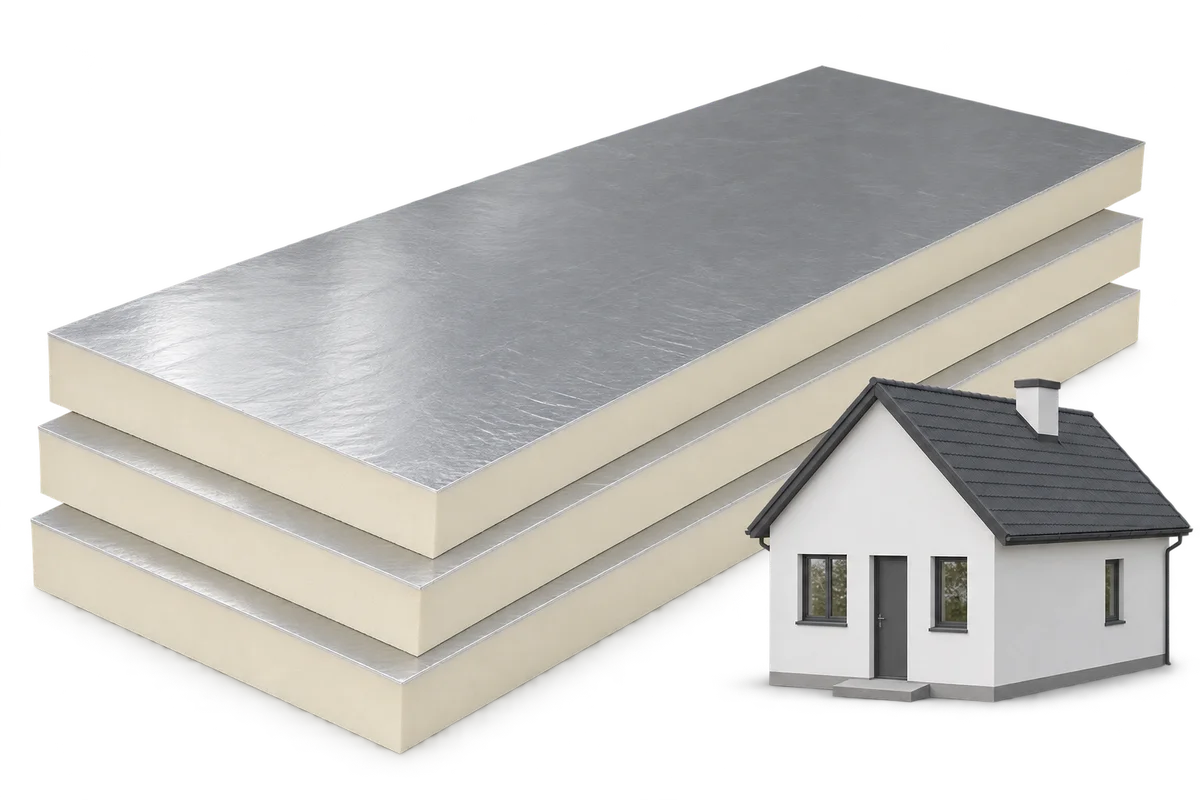
Compare labels with the order before distributing the material. Distinguish thicknesses and facing variants even when packs look similar. Keep a label photograph with the delivery-document reference. Once packaging is removed, that record helps establish which product was used in each work area.
Check condition before distributing packs
Where different batches or products are present, allocate clearly identified storage locations. Do not rely solely on the memory of the person receiving the vehicle. Installers should know which material belongs to each scope. Reassigning a batch requires an updated schedule, not just a verbal message.
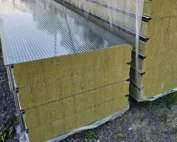
Inspect packaging and accessible surfaces at receipt under the agreed procedure. Record and photograph dents, edge damage or water traces. A photograph of the entire stack does not establish that every board was defect-free. Arrange further assessment without compromising people or material during unloading.
Prepare the waiting area
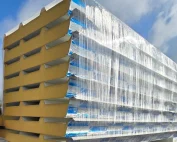
Prepare the holding area before arrival. Check the manufacturer’s requirements for support, weather protection and stacking. Do not transfer limits from another board’s instructions. Factory packaging has a defined purpose too; do not assume it provides indefinite site protection without checking.
Align deliveries with storage capacity and work sequence. A large reserve is unhelpful if it requires repeated handling or unsuitable storage. Assign responsibility for checking protection and reporting damage. Reassess actual conditions after weather changes or relocation of the stock.
Resolve discrepancies before installation
Separate doubtful material from boards released for installation. Mark the reason and who received the report. Silence must not be interpreted as permission to use it. Moisture or damage requires assessment under the product instructions and the selected construction solution.
Repairs to edges or facings and gap treatment should not follow “what we did last time”. Check permitted materials and procedures for this application. Retain a manufacturer or designer’s instruction for a specific discrepancy with the location reference. Do not automatically extend it to different damage.
Inspect the layer before it is covered
Before covering, compare board installation with approved details and installation requirements. Pay particular attention to junctions and penetrations that will become difficult to access. Do not invent permissible gap sizes from the appearance of a photograph. Resolve discrepancies before the next layer is installed.
Take photographs that identify location and stage. Pair a junction close-up with a view showing where it is. State whether the image precedes or follows a correction. Photographs cannot prove every property, but assist later discussion of a concealed part of the assembly.
Hand over the installation record
If work pauses, establish how installed material and exposed edges are protected. Protecting stored packs and safeguarding an installed layer are separate tasks. Do not assume instructions for one cover the other. Before restarting, confirm the condition of the elements left on site.
At completion, connect delivery records with the installed-board schedule, photographs before enclosure and agreed corrections. Identify unresolved items. This handover does not replace technical acceptance, but makes actual work traceable. It is more useful than unlabelled photographs and an invoice with no installation location.
7 branches. Materials closer to your project.

- SEROCK — Dzierżenin 34 E
- BŁONIE — ul. Sochaczewska 138A
- RADOM — ul. Grobickiego 8
- ŁÓDŹ — Natolin 8
- OLSZTYN — Barczewo, ul. Prosta 9
- WROCŁAW — ul. Jerzmanowska 10C
- GORZÓW WLKP. — ul. Zielona 33/34